Studying in China: An Odyssey of Academic Enlightenment and Cultural Immersion (2)
My studies in China have been both exhilarating and incredibly challenging. Even before I arrived, I had heard about the high academic intensity. Once I started, I was in awe of my Chinese peers' discipline, rigor, and dedication. They are accustomed to a demanding pace, and I quickly realized that to keep up and succeed, I had to put in an immense amount of effort. The professors are passionate and hold their students to high standards, constantly encouraging us to push our limits. This environment is defined by an unparalleled level of focus and a healthy sense of competition. This atmosphere inspires me to strive for progress, always pushing myself to be better than I was the day before. The high standards, set by both professors and my peers, have helped me develop a rigorous study routine and strengthen my self-discipline.
In China, education places a strong emphasis on practical application alongside theory. Rigorous evaluations, ongoing project deadlines, and a demanding schedule force me to stay on top of my work. While this academic environment was initially intimidating, it has consistently pushed me out of my comfort zone, helping me to unleash potential. I was particularly impressed by the advanced laboratory equipment and abundant educational resources available to me. As a science and engineering student, I had never imagined I would have access to such modern facilities and hands-on projects. These practical opportunities have taught me things that are not in textbooks, deepening my understanding of and passion for my field studies.
Just four months after arriving in China, I had the incredible opportunity to participate in two geological field excursions organized by Zijin Mining Group. Led by my academic advisor, we traveled to Daping Township, Yunnan Province, and Dongshengmiao, Inner Mongolia. These field investigations not only sharpened my research skills but also gave me a firsthand look at the people-focused culture of Chinese corporations. The company's employees and the local communities were incredibly welcoming and kind. I was struck by the "family-like" atmosphere, where a comfortable environment and high efficiency went hand in hand. Throughout these trips, I witnessed the meticulousness and effectiveness of Chinese researchers. The strong teamwork and open communication fostered a positive, collaborative learning dynamic with my advisor and colleagues. This experience significantly enhanced my understanding of my field in a practical setting and deepened my cultural exchange with my Chinese peers.
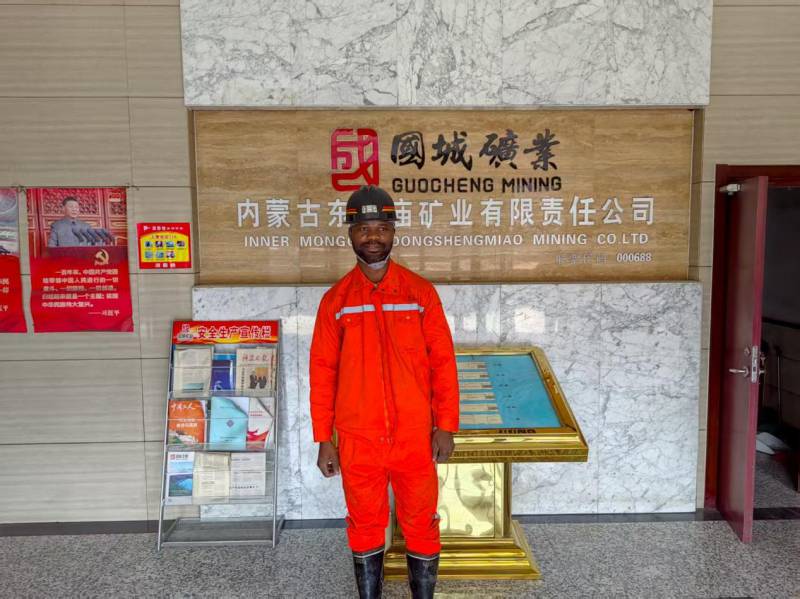
Franck conducting field investigation in Inner Mongolia
I also participated in numerous academic activities both on and off campus, which gave me access to high-quality educational resources and advanced research projects. The university's emphasis on combining theory with practice—from laboratory training to hands-on workshops—was instrumental in honing my comprehensive abilities. Furthermore, the regular networking events organized by the International Student Affairs Office proved crucial to my personal growth. Engaging with students from diverse backgrounds allowed me to exchange ideas and perspectives in an incredibly enriching way. Through these interactions, I learned that a single problem can be approached from many different angles and gained a deeper understanding of various global issues. This cross-cultural learning environment significantly broadened my horizons, while collaboration with students from different backgrounds enhanced my teamwork skills and taught me to be a more attentive listener. My conversations with professors and industry experts helped me re-evaluate my career path, as their advice and experience offered invaluable guidance for my future.
I was also fortunate to participate in significant events such as the 6th Forum on China-Africa Media Cooperation and China-Africa Think Tank High-Level Dialogue. These experiences provided me with extensive first-hand insights into the profession, deepening my understanding of professional issues while building a broader global perspective. Language, however, presented another major hurdle. With courses taught in both English and Chinese, I could only adapt to it as soon as possible. While the language barrier was initially a significant source of stress, the patient support of my teachers and teaching assistants enabled me to steadily improve my language proficiency. The university's academic and psychological support services were also vital in helping me manage my time, cope with pressure, and maintain a positive attitude.
Over time, I've built a strong network of friends in China. These relationships are not just important for my current studies but will be invaluable to my future career. The journey has not been easy, but I truly believe it has been the most valuable lesson of my life. I've learned to be independent, to stay focused on my goals under pressure, and to contemplate how I can apply my knowledge to contribute to my home country. Of course, there were times when motivation waned and I questioned myself: "Did I make the right decision? Can I really keep up with this pace?" In these moments of doubt and fatigue, the unwavering support of my African friends was my anchor. We became each other's pillars of support, navigating challenges together and celebrating every small victory. We regularly gather to share our experiences, encourage one another, and even cook meals from home. These simple moments became my most reliable source of strength. We all recognize that this journey, though fairly short, will bring long-term rewards in the future, and we feel fortunate to be studying in China, a global leader in technology and economics. We understand that with every challenge we overcome, we move one step closer to our dreams.
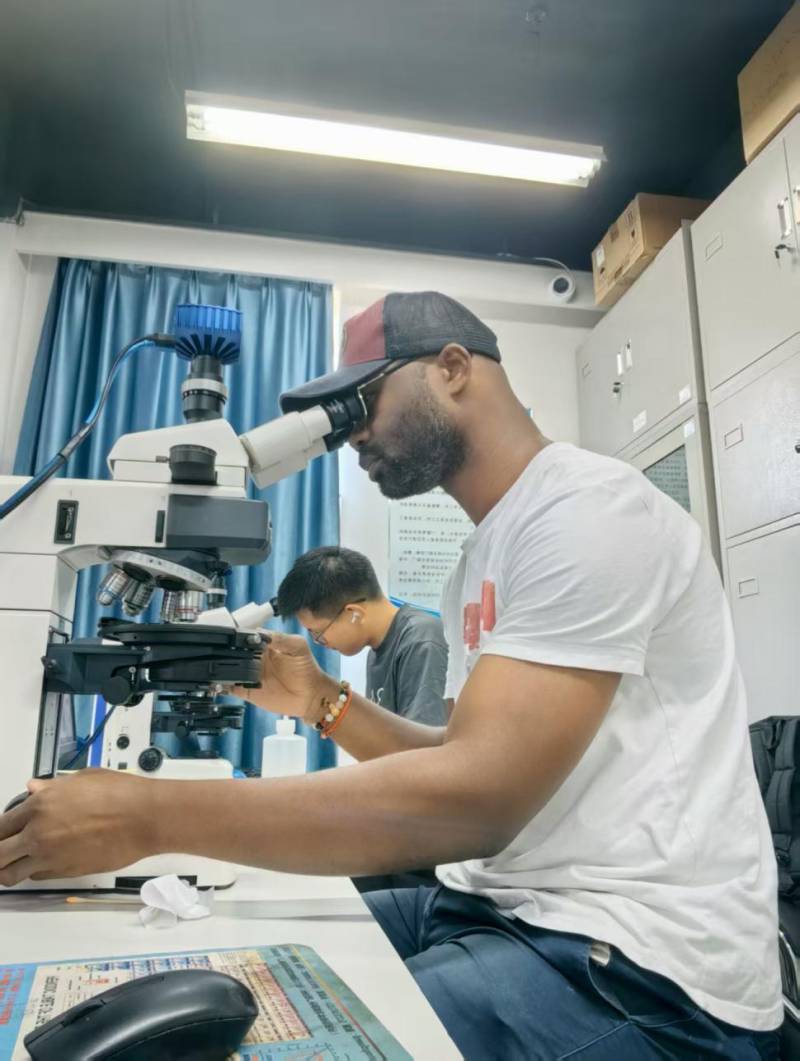
Franck working in the university laboratory
On this journey, I have also learned to balance the demands of a high-intensity academic environment with my personal well-being. To avoid burnout, I started making time for recreational and social activities, such as going on outings with friends, visiting cultural sites, hosting small get-togethers, and even organizing an international student basketball team. These outlets were essential for me to recharge and maintain focus. Looking back, I am convinced that this has been more than an academic pursuit; it has been a profound journey of self-improvement, teaching me the values of resilience, patience, teamwork, and perseverance. Every challenge overcome and every small success achieved have forged me into a more capable person. I firmly believe that by continuing to work hard, I will realize my full potential in China and ultimately bring this growth and knowledge back to Africa and contribute to my home country.
V. Opening My Heart to the World's Diverse Cultures
The longer I live and study in China, the more my perspective has broadened. Living in a country so different from my own has been an invaluable cultural gift, teaching me to appreciate cultural differences and the importance of tolerance. My university's diverse environment has greatly enriched my academic experience. Working with students from all over the world, I've learned to bridge cultural divides and find common ground—a skill that's essential in our globalized world. In group projects, we brought together diverse perspectives to tackle complex problems, and the insights gained from this intellectual exchange were far more valuable than anything a classroom lecture could offer. In my free time, I've been actively involved in various cultural clubs, volunteer work, and cultural festivals, where I've met people from all corners of the globe. These interactions have sparked a deep curiosity about different cultures and traditions. I've participated in everything from international food workshops to cultural salons that have not only taught me about other countries' values and customs but have also given me a new lens through which to view my own culture. These experiences have significantly expanded my horizons and reshaped my way of thinking.
During my field investigation in Dongshengmiao, Inner Mongolia, I quickly bonded with the local team. They even invited me to represent their company in a basketball game. Although we did not win, the sense of belonging brought by the game was something I'll never forget. I also had the opportunity to visit natural and cultural landmarks like Dianchi Lake in Kunming, the deserts of Inner Mongolia, the Yellow River basin, and the Baotou Museum. These excursions gave me a true appreciation for China’s stunning landscapes and deep cultural heritage. Back on campus in Wuhan, I continued to partake in various sports and cultural events with my fellow international students. These group activities deepened our friendships, helping me build a warm and supportive community far from home.
I particularly value the cultural exchanges with my classmates from Asia, Latin America, and Africa. Such small talk, where we share our daily lives and experiences, has become my window to the world. I'm also grateful to have made many Chinese friends who are curious about my home country and eager to hear about my culture, family, and traditions. In return, they have enthusiastically introduced me to their culture. I've often been invited to celebrate traditional Chinese holidays, such as the Mid-Autumn Festival (for family reunions and thanksgiving), Double Ninth Festival (for honoring elders), Qingming Festival (for tomb-sweeping and ancestor worship), and Chinese New Year. More than just explaining the customs, my friends have warmly included me in their family celebrations. These experiences have given me a deeper understanding of Chinese culture and the profound importance placed by its people on family, kinship, and passing on the tradition, making me feel genuinely respected and welcome in this foreign land.
The diversity of Chinese culture is evident not just in its festivals but also in the details of everyday life, particularly its cuisine. With countless regional varieties, each province boasts its own unique cooking styles and flavors. While I've grown to love northern dumplings, Sichuan noodles, and Inner Mongolian lamb, I still need time to adjust to certain fermented or sour dishes. To satisfy my craving for a taste of home and to share my culture with others, I began cooking African food with local Chinese ingredients. Although the ingredients may be limited and the resulting flavors might not be perfect, the very act of cooking itself is both a way for me to relax and a form of cultural expression. I often invite friends—from African countries like Madagascar, Mali, Congo, Liberia, and Chad, as well as Chinese friends—to try my home-cooked meals. They always have wonderful things to say about the "taste of Africa" I prepare. Around the dining table, we don't just share food; we share the stories and memories behind our respective cultures. These moments help us look past our differences, bridging the distance between our hearts and forging deep and lasting cross-border friendships.
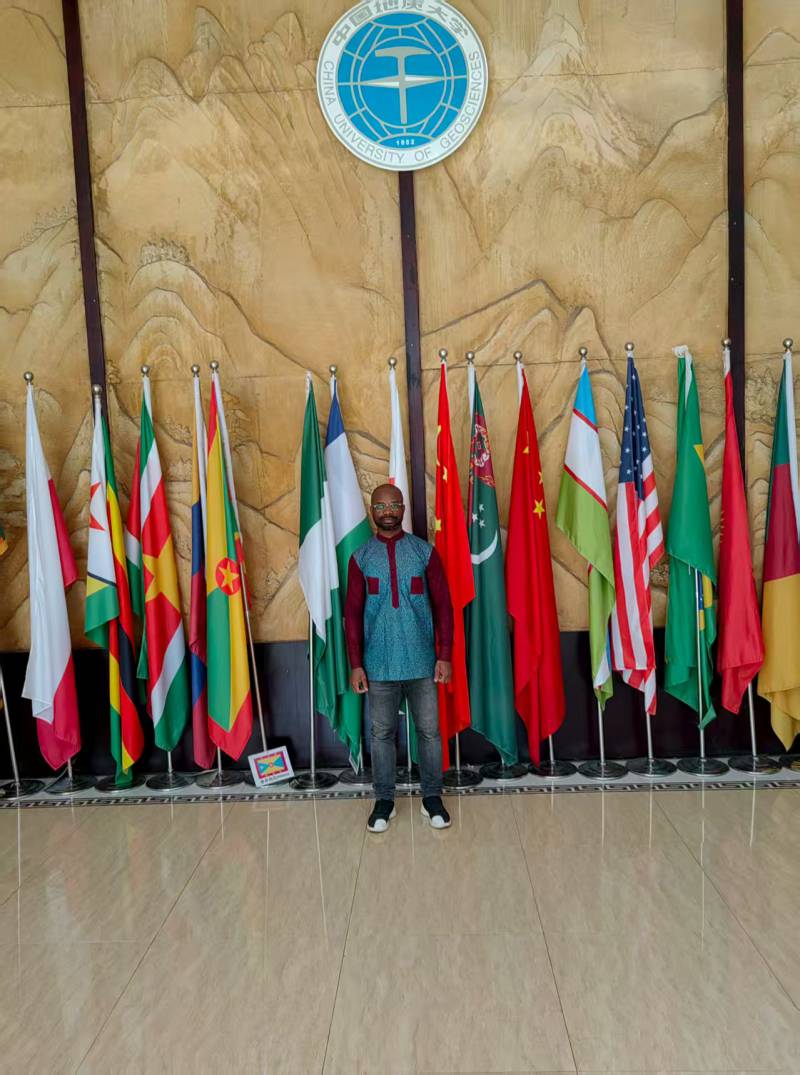
Franck at China University of Geosciences (Wuhan)
VI. A Glimpse into a Digitally Advanced China
Upon arriving in China, I was immediately struck by the stark difference in lifestyle from my home country. It’s been an adventure full of both challenges and pleasant surprises. The environment here feels both familiar and new, and as I've adapted, my perspective has continued to broaden. The cost of living is quite reasonable for international students, and the advanced urban infrastructure makes everyday life incredibly efficient. The most astonishing aspect, however, is how technology is deeply integrated into every single detail of people's daily lives in China. Apps like WeChat and Alipay are essential "super tools" for everything from buying groceries and paying tuition to booking train tickets and ordering food. More than just payment methods, they combine social, professional, and entertainment functions, making them my most indispensable "life assistants." I am also deeply impressed by the values upheld by Chinese people and their pace of life. Punctuality, integrity, respect for elders, and a rigorous work ethic are fundamental. This cultural foundation contributes to China's burgeoning economic development, creating an ideal environment for ambitious young entrepreneurs. The passion for technological innovation among young people here is contagious, inspiring me to consider how I can use the skills I'm learning to launch a business in Africa one day. While Chinese hospitality may not be as outwardly expressive as in Africa, it is incredibly warm and sincere. People may seem reserved at first, but once trust is built, their warmth and generosity are unmistakable. It is this type of deep-rooted, enduring friendship that I have come to truly treasure.
Of course, adapting to it has never been easy. The initial culture shock was real—language barriers, different social etiquette, and contrasting communication styles left me feeling disoriented. Little by little, I came to realize that these "obstacles" were actually opportunities for growth. I started to appreciate the Chinese people's respect for order, their patience with others, and their strong sense of community. These values gradually became a part of who I am. More importantly, these experiences prompted me to reflect on the cultural norms of my own upbringing while cultivating an open-minded appreciation for diverse lifestyles and perspectives. My time in China has instilled in me the understanding that both personal and professional growth require patience and adaptability. Here, I've developed resilience in facing challenges and learned to perceive difficulties as essential components of the learning process. The ability to stay curious and embrace multicultural environments is the most precious lesson I've gained from these experiences. This journey has been more than just a period of study—it's been a transformative life education that taught me to maintain equanimity and flexibility in the face of the unknown. These accumulated experiences have become a wellspring of inner strength, empowering me with renewed confidence for the future.
About the Author:
Franck Désiré GOGNAN (Chinese name: 郭浩勇) , from Côte d'Ivoire, is currently a Ph.D. candidate in geology at the China University of Geosciences (Wuhan). He specialized in mineralogy, petrology, and mineral deposits. His research focuses on using methods like trace elements, stable isotopes, and fluid inclusions to analyze the formation of ore deposits, the origin of mineralizing fluids, and the source of ore-forming materials. He also applies machine learning to geochemically identify and classify pyrite and sphalerite within SEDEX-type deposits. Franck's exceptional professional skills have been widely recognized. He was named The Best Mineral Exploration Geological Engineer in Côte d’Ivoire by KASSA GOLD SA. He has also excelled in the "Tripartite Symposium"—a collaborative event involving universities, mining authorities, and industry companies in Côte d’Ivoire. Furthermore, his outstanding potential and international vision were acknowledged in China with the award of “The Third C-STAR African Youth Innovation & Entrepreneurship Program”.


