The 21st Africa Lecture held by CAI
The 21st Africa Lecture was held by China-Africa Institute (CAI) on Sept. 14, 2026, featuring a keynote speech by Professor Ahmadou Aly Mbaye, a Senegalese economist, and former Rector of the Cheikh Anta Diop University (UCAD) in Dakar.
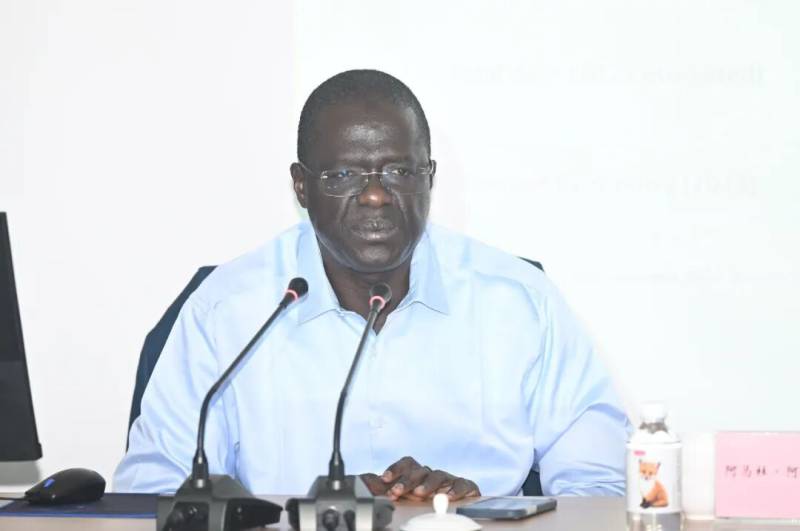
Prof. Ahmadou Aly Mbaye is making a speech
In his speech titled “China-Africa Economic Relations: The Present and Prospects”, Prof. Ahmadou Aly Mbaye noted that China-Africa relations should be analyzed against the backdrop of global polycrisis, including geopolitical conflicts, climate change, global debt crisis, trade friction and breakdown of democratic governance. In recent years, China has witnessed substantial growth in its foreign trade and two-way investment, and China-Africa bilateral trade has maintained an overall growth momentum. Meanwhile, Africa still accounts for a relatively low share of global trade and foreign direct investment, with declines recorded in some indicators. The continent continues to grapple with structural challenges such as inadequate production capacity, weak industrial foundation, and lack of impetus for industrialization.
Prof. Mbaye reflected on China's rapid economic growth and structural transformation since the introduction of the reform and opening-up policy in the 1970s. Through comparative analysis, he explored the core challenges facing both Africa's economic development and China-Africa economic and trade cooperation. He pointed out that many African countries struggled to attract foreign investment, especially in the manufacturing sector, due to prohibitive costs for unit labor, energy and infrastructure, as well as insufficient human capital. While China's investment in Africa covers a wide range of sectors, it is still constrained by local business environment, infrastructure conditions, labor systems, differences in work ethics and other factors.
Prof. Mbaye also offered an in-depth analysis of the debt challenges facing the African nations. He said that some African countries are currently under heavy debt pressure, forcing them to cut government spending on infrastructure, education and healthcare. He believed that as a major global economy and key partner of Africa, China can continue to play an active role in facilitating debt resolution and improving development financing environment for Africa.
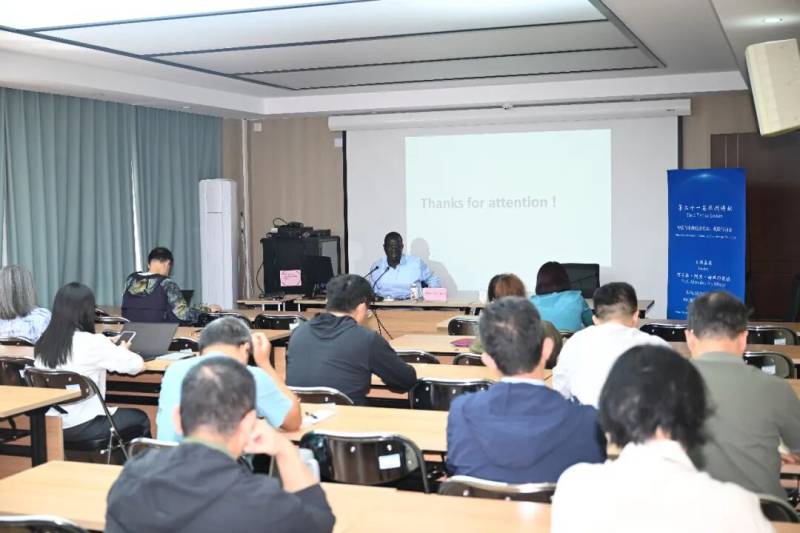
A scene of the 21st Africa Lecture
Looking ahead, Prof. Mbaye noted that to further deepen China-Africa economic and trade cooperation, the two sides should promote investment diversification in Africa and boost Africa's production capacity, so as to better unlock the dividends brought by China's zero-tariff policy for Africa. The policy, which took effect on May 1, 2026, covers 53 African countries with diplomatic ties to China. Furthermore, Chinese enterprises are encouraged to strengthen partnerships with local African businesses to reduce operational barriers caused by differences in laws, work ethics and labor systems. Finally, China and Africa should deepen academic exchanges and research cooperation, and enhance mutual understanding in politics and economics, in order to provide stronger intellectual support for policy-making and investment activities.
During the Q&A session, scholars from the CAI held an in-depth discussion with Prof. Mbaye on a wide range of topics, including the growth of China-Africa trade, Africa's debt challenges, China's zero-tariff policy for Africa, China's development experience and its implications for Africa, as well as the Forum on China-Africa Cooperation (FOCAC).


